

Discover more about our members and digital health community.
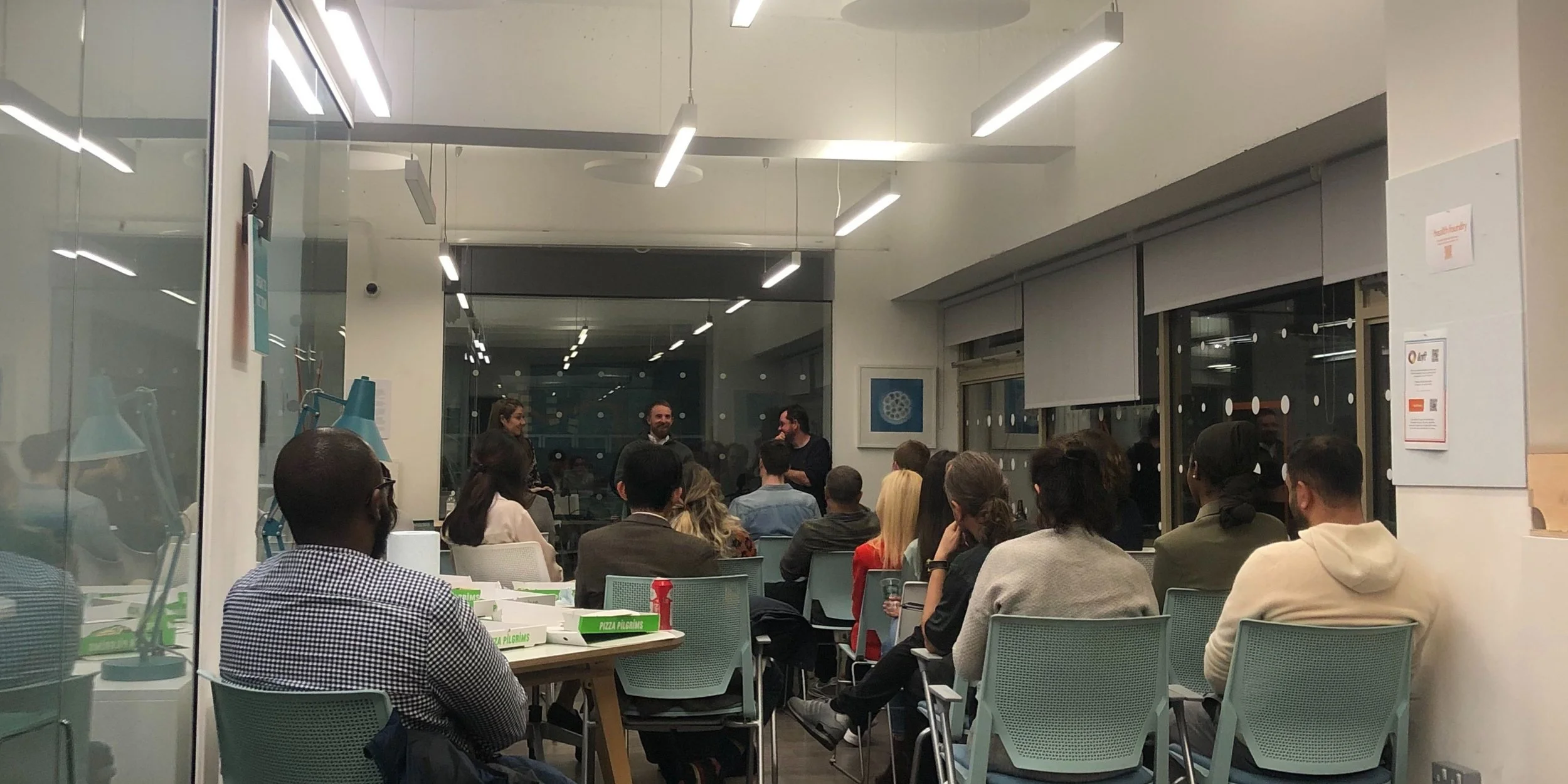
Lunch & Learn - The Warm Up: The basics of Anthropology.
On the 13th of January, we'll be joined for a hybrid Lunch & Learn by Orkideh, Fabio, and Abhishek: social anthropologists from the Department of Anthropology and Sociology at SOAS University of London. In lead up to this fantastic webinar, Health Foundry take a look into the basics of Anthropology and the studies behind it.
On the 13th of January, we'll be joined for a hybrid Lunch & Learn by Orkideh, Fabio, and Abhishek: social anthropologists from the Department of Anthropology and Sociology at SOAS University of London. In lead up to this fantastic webinar, Health Foundry take a look into the basics of Anthropology and the studies behind it.
“The purpose of anthropology is to make the world safe for human differences”
Anthropologist Ruth Benedict (1887-1948)
Anthropology is often described as the study of the human condition: how people live their lives, the life-worlds they form, their histories and futures, and their relations with not just other people, but also things, environments, and ideas. In doing so, anthropologists might study technologies, futures, economies, health care and governments. In its methods, anthropology gives time to understanding deeply what makes us uniquely human and to increase our understanding of ourselves in the process. It has variously been spoken of as making the familiar strange and the strange familiar, as addressing large issues in small places, and even as the most humanistic of the sciences and the most scientific of the humanities.
Career options in anthropology are on a steady incline, and more are becoming interested in undertaking studies therein. Much like the many areas it researches, the range of courses offered within anthropology is also wide and varied. This is part of its charm, as skills provided and taught within this discipline go far beyond what might be traditionally considered as its domain. Detailed further by Princeton University USA ‘Therefore, in addition to ethnographic methods, anthropologists will sometimes employ more quantitative social science methods (such as surveys), natural science methods (such as laboratory research), and methods associated with the humanities (such as textual and visual studies)’.
Now, let’s zoom in on our Panel for the upcoming webinar; The Department of Anthropology and Sociology is one of the leading research-driven centres in the UK. Unlike other UK Anthropology departments, SOAS anthropologists are specialists on Asia, Africa or the Middle East, their global interconnections, and their diasporas. Some of the subjects SOAS anthropologists cover include gender and other social identities, belonging and exclusion, material culture, AI and digital cultures and many more. But for the upcoming event, we are focusing on the intersections between health care, medicine, technology and anthropology. During the hour-long session, our panellists will talk about how an anthropological view can help organisations, such as yours, and discuss examples where founders and management have invested in blending big data on markets (or scale) with thick data (or immersive understandings of their users).
Hot Topic Article: The transformation of the way we work
Tasha Wait, Marketing lead, looks into the changes of our working habits and reflects on the growth of co-working spaces and the benefits it can bring to digital health companies.
Recent years have drastically changed the landscape of our working routines and the environment in which they are formed. In this blog, Tasha Wait, Community and Marketing Lead , reflects on the growth of co-working spaces and the benefits it can bring to digital health companies.
Co-working can be defined, in self-explanatory terms, as an office space which is shared with various other companies with the hope of collaboration and connections. The steady incline of co-working spaces was seen long before the pandemic years and was recognised as a potential booming industry. According to projections by Statista, there will be some 41,975 co-working spaces worldwide by the end of 2024, with London being recognised as a hot spot favourite for this growth, as there are near 2000 co-working spaces currently active in England’s capital. Co-working thrives amongst urban environments, but many factors can be attributed to the success of this industry.
Looking back over a decade, we can see the change in the global economy as the world becomes more connected and Internet usage surged, which presented new opportunities to both entrepreneurs and businesses. This enabled the expansion of freelance industry due to its newfound accessibility and freelancers flourished into co-working spaces. Further pushes from Generation Y for new approaches to working were slowly being adopted by the corporate world, who now widely accept the idea of collaborative working.
Then the pandemic hit, and many companies started to adopt new ways of remote working, and before we knew it offices sat empty with many never to be used again. But research started to indicate towards the damaging effects this could have long term for company culture, employee productivity, mental well-being and also brainstorming and collaboration techniques that improve company flow and creativity. This began the emergence of the buzz word of the year ‘hybrid working’.
Rated as the ‘best way of working’ continuously on LinkedIn polls, used as clickbait in news article headlines, discuss and criticized on Twitter, analysed deeply within data and statistic’s; hybrid working soon become a familiarized term and concept within the working world. and this caused a second wave of hype and interest in the concept of co-working communities. These communities identified and resolved the pain points organisations had started to feel, it gave flexibility to what was once a rigid system. Alongside offering a cost effective and sustainable way of moving forward.
As the market grow, the missions of co-working spaces have evolved, and co-working communities have started to specialise into sectors, advertising to certain groups of start-ups and Small and Medium-sized Enterprises (SMEs). This type of environment works well for companies at early stages due to the flexibility, cost effectiveness, stronger business networking, community connections and supplied tailored events and programmes. And that’s where we fit in – Health Foundry prides itself on being a digital health community co-working space.
Health Foundry launched in 2016 to provide a supportive ecosystem and physical space for digital health start-ups to create and adopt scalable digital health solutions. We soon realised that health innovation isn’t just about start-ups and clinicians, but also about a wider range of stakeholders across the health system, all of whom could benefit from digital health innovation.
To deliver our mission, we have three strands of work:
Support: We support our members to create the best digital products by providing a functional collaborative workspace and wide range of business support and sector specific resources
Connect: We facilitate connections for our members to the healthcare system, local community and each other
Enable: We enable communities to lead better, healthier independent lives by enabling our members to create better digital health products.
We have a growing community of members within the health and digital tech sectors, and a team that facilitates connections across the healthcare system. 91% of members have said that our space has been important to their journey so far. Here are some of what our amazing members are up to:
Bionabu® is the world’s first Medtech expert knowledge marketplace. They connect entrepreneurs, companies, private and public institutions with vetted expertise and education to drive forward innovation.
Liberate Pro Healthcare Ltd – The Liberate Pro platform improves patient education and efficacy, increases patient engagement and most importantly decreases health inequalities in society
Tellmi is a multi-award-winning app which provides young people with anytime, anywhere access to peer and counsellor support, as well as a range of mental health self-management tools that can be accessed 24/7. Over 75,000 young people are on Tellmi and can be downloaded from the Apple App Store and Google Play for Android.
As we enter 2023, new trends and buzzwords are going to come and go, but it’s going to continue to be important for companies, no matter what stage, to have a base and be part of a community that supports each other.
If you’re interested in joining our digital health community don’t hesitate to get in touch.
Happy New Year everyone!
Hot Topic Article: The Emerging Entrepreneurial Economy
With November being a month to celebrate entrepreneur’s, we take a look at what this means, and trends that have played out within 2022 - including a understanding of ‘agile workforces’.
As we start to see a glimpse of 2023, it's very apparent of the vastly changing world we are all living in, and quite simply the economic crunch time of the decade. Much like in 2007/2008, the ‘entrepreneurial economy’ is emerging again. It could be quite simply blamed on a natural human reaction to zero stability and the habitual fear of the unknown – but as our generations evolve it's coming transparent that it’s something deeper and there’s a shift happening within the personality of our workforces.
Defined as ‘agile workforces’, they are experts in dealing with new challenges of today’s landscape and are comfortable with disruptive change. Understanding the flexibility and abnormal life cycles of businesses in today’s climate. Technological disruption is still accelerating to the finish line with market research changes not far behind it, and the cycle of ‘new way of doing things’ becoming nearly more frequent than our prime minister. Further, historical brands such as Ford, Burberry and Absolut pride themselves on their agility to move with the times, whilst watching fellow brands like Blackberry crumble with the pressure to do so. However, as easily agile workforces grow, it creates a parallel to those wanting to create their own organisations and become free from the strain of corporate businesses’ struggling to pass the exams of 2022 and life after Covid.
Forbes came out with the statement titled ‘Pandemic Fuels Global Growth of Entrepreneurship and Start-up Frenzy’, the acceleration grossly surpassing the numbers that were predicted. Such surge is being blamed on a mixture of things, the accessibility to passive income and the growing gig economy, agile workforces creating founders who are aware and conscious of the climate they enter into, workers who were laid off in the pandemic whilst also the opposite, extra time in lockdown led to creativity and spur of ideas. The increase of digitalization can be also viewed as a catalyst in the start-up world, as those who have been capitalizing early on the impacts of technological improvements have seen between the lines and found simple solutions to previously overlooked problems
The World Economic Forum (2022) reports 6 trends in global entrepreneurship:
“1. Positive entrepreneurial sentiment on opportunities suggests global recovery
2. Entrepreneurial activity rates are still lower in most countries compared to pre-pandemic
3. There is a rising trend of low-growth entrepreneurial activity
4. There is a paradox between perceiving it as easy to start a business and intending to do so
5. Digitalization is rising among low-income countries and new entrepreneurs
6. Entrepreneurship education in school continues to fail”
With what seems like a unstable few years ahead of us all, it is positive to see start-ups and the entrepreneurial world still paving its way through the storm – much like our members who continue to work hard for positive change.

Health Foundry Newsletter: December 2022
This months Newsletter is all about looking back on some of the amazing things are members have done this year!
Also talks about what some of our new members and what it is they do.
Have a great Christmas Everyone 💛💙⛄️
Read it here

Health Foundry Newsletter: November 2022
Happy November Everyone
Make sure to check out this months newsletter filled with exciting new events and opportunities 💛💙
Read it Here!