

Discover more about our members and digital health community.

Health Foundry Newsletter: June 2022
June is here, and it’s Pride Month! Click through to read this month’s special feature, upcoming healthtech events, opportunities and more.
Happy Pride Month members and friends
June is here, and it’s Pride Month!
With changes in the team and some great programming and events in the works, we're really looking forward to the coming months at Health Foundry.
We'd also like to wish everyone a Happy Pride Month, especially our amazing LGBTQIA+ community in digital health and beyond!
Head over to our June newsletter here to read a special feature on our new Programmes & Partnerships Lead Chris French, as well as community news, healthtech events, opportunities and more.

Member Feature: Little Journey
Click through to read more about our member of the month who are supporting children to better health, the award-winning Little Journey.
Our member feature this month is on the award-winning Little Journey, who are supporting children and their families before, during and after healthcare interactions, reducing anxiety and improving health outcomes.

Little Journey was founded in 2018 by Dr Chris Evans, an anaesthetic doctor, and Sophie Copley, an expert in human-centred product design. Combining their experiences and expertise, they created Little Journey: a digital eSupport platform designed to prepare, support and inform children and their families throughout healthcare interactions (occurring within both routine care and as part of a clinical research trial).
How does Little Journey work?
Little Journey believes in the power of familiarisation and desensitisation through immersive play to reduce healthcare-induced anxiety, facilitate individual coping strategy development and improve patient experiences and outcomes. The Little Journey platform consists of a family-facing smartphone app and an accompanying web portal accessed by healthcare and research organisations.
Co-created with families, the app delivers engaging, interactive content tailored to the child’s age, procedure type and local hospital. Psychologically preparing and supporting families via virtual tours, hospital guides, relaxation animations, and therapeutic and distraction games, the app has been demonstrated to reduce anxiety and provide significant organisational cost benefits (e.g. through a reduction in on-the-day cancellations). The innovative Little Journey web portal enables organisations to configure app content to their local policies and patient pathways including the uploading of 360-degree images of the actual rooms families will visit for use in the virtual tours.
Little Journey is currently configured to over 50 NHS trusts plus several international hospitals. In 2021 the company was licensed by a global contract research organisation to support children participating in an international paediatric research trial involving multiple procedures and site visits; this resulted in the development of a gamified medication monitor designed to improve adherence to prescribed medication. The platform now supports a variety of procedures (surgery, endoscopy, covid swab testing, phlebotomy) and has been translated into 16 languages.
The Little Journey team is passionate about enabling all children to receive the peri-procedural preparation and support they want and need. Work has commenced on creating new patient pathways (including MRI and ITU) and exploring the potential of using data to further personalise the support provided.
What next for Little Journey?
In April the company announced its collaboration with The LEGO Foundation, having been selected to join the Play for All Accelerator. This will enable enhancement of the product to provide specific support for autistic children and those with ADHD.
Words: Little Journey
To find out more or to connect with Little Journey, head over to their website here.

Health Foundry Newsletter: May 2022
May is here, and it’s Mental Health Awareness Week and International Nurses Day! Click through to read this month’s community features, upcoming healthtech events, opportunities and more.
Happy May members and friends!
It's Mental Health Awareness Week, of which this years theme is Loneliness.
With many of us having experienced isolation, especially during the pandemic, the feeling of loneliness will be all too familiar.
Some of Health Foundry's amazing members are breaking the stigma around mental health issues and seeking support, as well as improving mental health services and access to care here in the UK. They include:
Thalamos, who are digitising the Mental Health Act
MeeToo: anonymous peer-to-peer support app for young people
re;mind: self-help app for trauma, PTSD or C-PTSD support
Doctors in Distress: support for Healthcare Workers
Helsa Helps: improving LGBTQ+ mental health and wellbeing through training, support and research
First Aid for feelings by The Helpful Clinic
And many more.
Dealing with loneliness can be difficult, but there are things we can all do to cope, raise awareness and prevent some of the negative feelings that come with it. You can download and share the Mental Health Foundation's help and advice guide for coping strategies that may useful for you or someone you know.
It's also International Nurses Day, and we'd like to say a big thank you to the amazing nurses and midwifes in our community and worldwide for the care and dedication they give to patients everyday!
Follow the link here to read the rest of our newsletter, including this month’s member feature on the award-winning Little Journey, upcoming healthtech events, opportunities and more.

Easter Closing Times
Health Foundry Easter 2022 closing times.
We’re taking a break!
Health Foundry will be closed over the Easter Holidays from 6pm on 14 April 2022 to 19 April 2022.
If you need to contact the team during this period, please don't hesitate to get in touch here.
We hope you all have an enjoyable weekend!
Member Feature: Immersive Rehab
Click through to read more about our member of the month, digital therapeutics for neurorehabilitation, Immersive Rehab.
This month's feature is on one of our amazing members Immersive Rehab; a digital health startup improving patient recovery with Virtual Reality neurorehabilitation programmes.
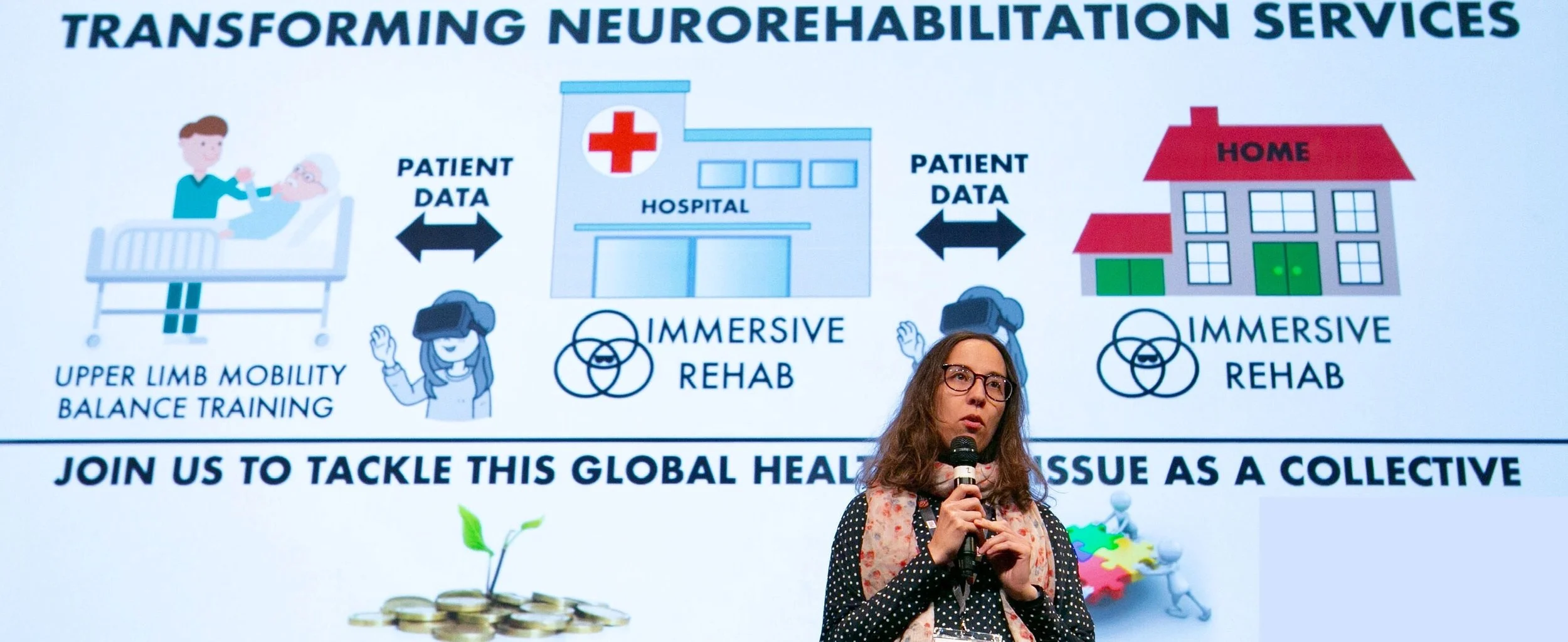
Dr Isabel Van De Keere is the Founder & CEO of Immersive Rehab, a digital health startup transforming neurorehabilitation by offering personalised and engaging neurorehabilitation programmes in Virtual Reality with the aim to improve patient recovery, enhance patient assessments for healthcare professionals, and reduce waiting times to access rehab.
Following a long neurorehabilitation period herself due to a work accident in 2010, Isabel decided to start Immersive Rehab in August 2016. With a MSc background in Electro-Mechanical Engineering and as a Doctor in Biomedical Engineering & BioMaterials Science, Isabel is an experienced healthcare technology innovator, product designer and manager, innovation consultant, scientist, experimentalist, and collaborator across disciplines.
She is passionate about healthcare technologies and digital health, immersive technologies and its applications in healthcare, tech for good, social entrepreneurship, and promoting diversity in tech.

What is Immersive Rehab’s mission?
We are addressing an urgent need in healthcare and more particular in neurorehabilitation services for people affected by neurological conditions like stroke, spinal injury and multiple sclerosis. Immersive Rehab’s vision is to empower these patients and give them more independence back by providing access to engaging and personalised digital therapeutics neurorehabilitation solutions, with the aim to improve patient outcomes and increase access to necessary services.
What is innovative about our work?
Immersive Rehab’s mission is to transform and improve the way neurorehabilitation is currently being approached by offering personalised and engaging neurorehabilitation programmes in Virtual Reality. Our aim with our digital therapeutics solution is to achieve important gains in a patient’s mobility and function beyond what can be achieved with current neurorehabilitation practices, focusing in particular on improving upper limb & fine motor function and balance for patients affected by neurological disorders such as stroke, spinal injury, MS and ALS.